
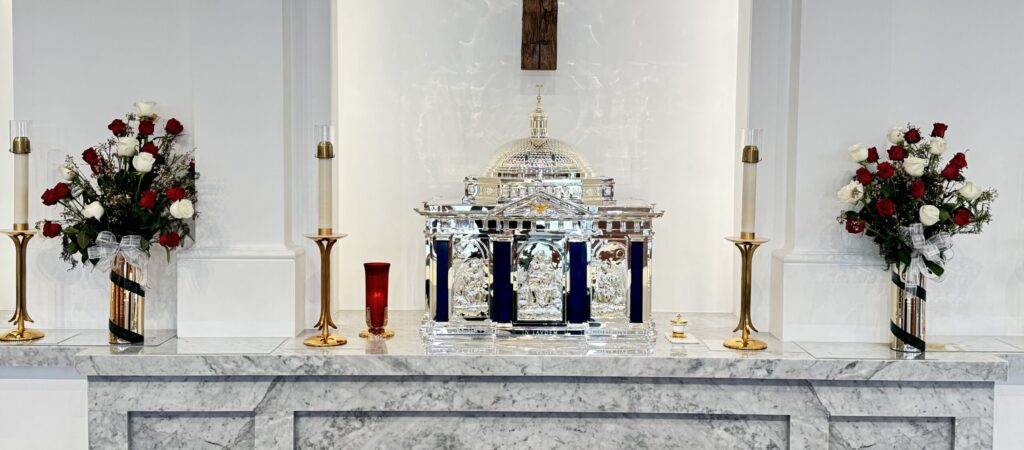
Ut simus in laudem gloriæ ejus
— Ephesians 1:12
“That we might exist for the praise of His glory.”
Gate of Heaven
In 2026, Saint Hedwig Catholic Church commissioned Heritage Liturgical to design and fabricate a sacred tabernacle of exceptional quality in order to draw renewed attention to the Real Presence of Jesus Christ in the Blessed Sacrament.
Named Porta Cœli — “Gate of Heaven”, the tabernacle honors the Blessed Virgin Mary through whom Christ entered the world in the mystery of the Incarnation. Just as the Son of God first dwelt within her before appearing to the world, so Christ now dwells sacramentally within the tabernacle before being brought forth to the faithful in Holy Communion.
The tabernacle appears as a small sacred temple, visually proclaiming that the Eucharist reserved within is nothing less than the dwelling place of God among His people.
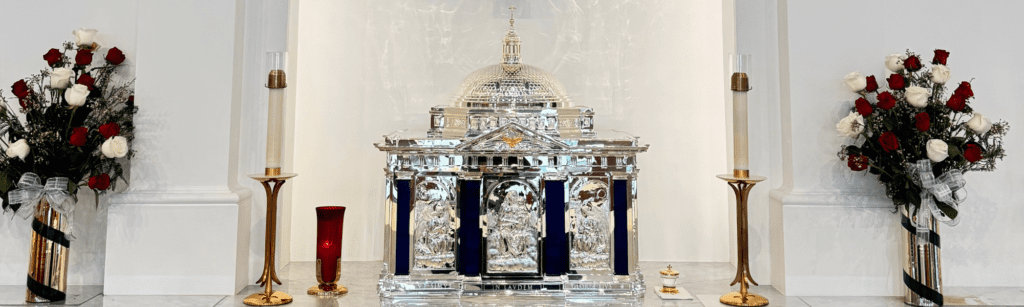
A Temple for the Real Presence

In an effort to inspire prayer and bring attention to the Real Presence of the Blessed Sacrament, Saint Hedwig Catholic Church commissioned Heritage Liturgical to design and fabricate an exceptional tabernacle of the highest quality.
The tabernacle appears as a small temple representing the Church as the Mystical Body of Christ, the place where God dwells with His people. Its design reflects Saint Paul’s teaching that Christians are “living stones” in God’s spiritual building.
Like the Tabernacle of Moses and the Temple of Solomon—the first two great sacred buildings described in Scripture—the Porta Cœli Tabernacle is built upon a solid inner framework of cedar.
Supporting this structure is nearly 400 pounds of brass, carefully plated in silver and gold to create a work worthy of the divine presence.
The structure follows a centralized architectural plan crowned by a lantern-topped dome. This design reflects the ancient architectural form known as a tholos, historically used for places of veneration. Its form naturally draws the eye upward while calling attention to the Eucharist reserved within.
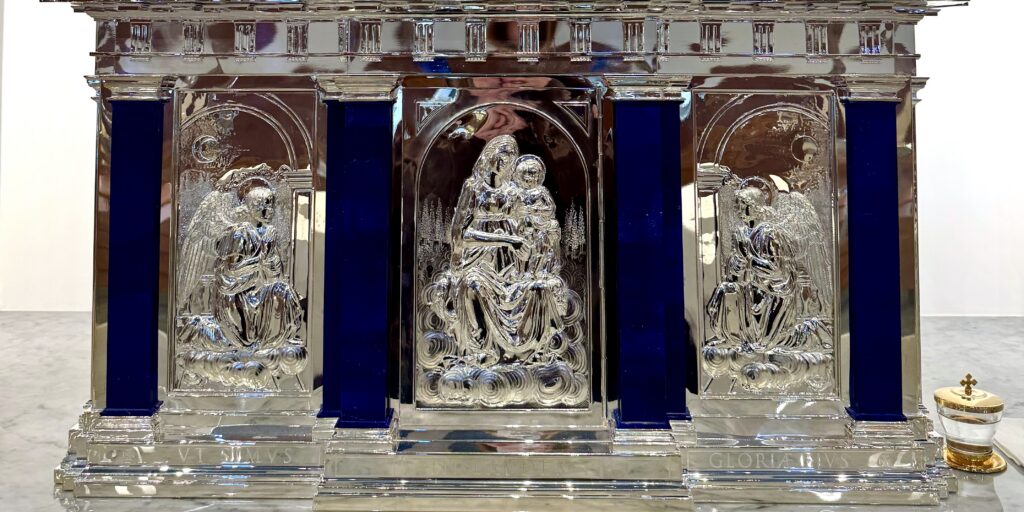
Architecturally correct down to the smallest details, the tabernacle employs the Doric Order, one of the most ancient and dignified classical styles. Decorative triglyphs and carefully proportioned elements reinforce the temple imagery, while striking pilasters made from pure blue lapis lazuli frame the sacred structure.
Together these elements proclaim visually that the Eucharist is the true center of the Church’s life and worship.
A Work of Sacred Beauty
The Porta Cœli Tabernacle was crafted using materials of remarkable beauty and rarity, reflecting the long tradition of offering the finest gifts to God.
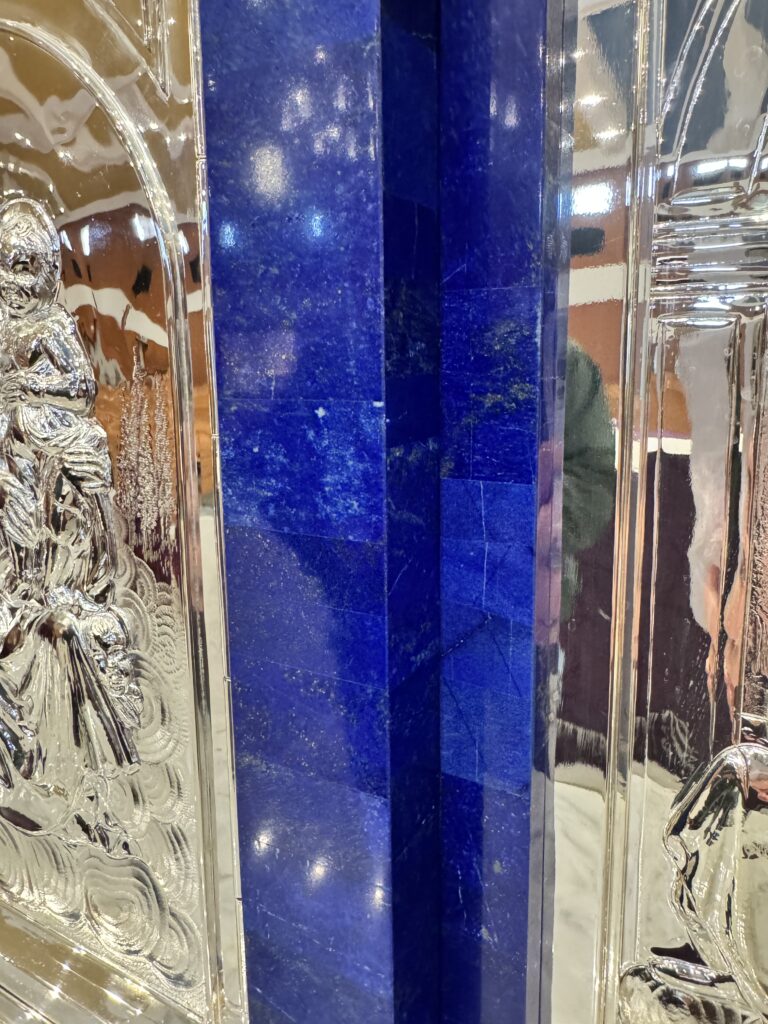
Among its most striking features are the deep blue lapis lazuli pilasters. Sourced from Afghanistan, lapis lazuli has been prized since ancient times for its brilliant color and association with heaven and divine truth. Within the tabernacle’s design, these luminous columns frame the sacred figures and contribute to the overall harmony of the structure.
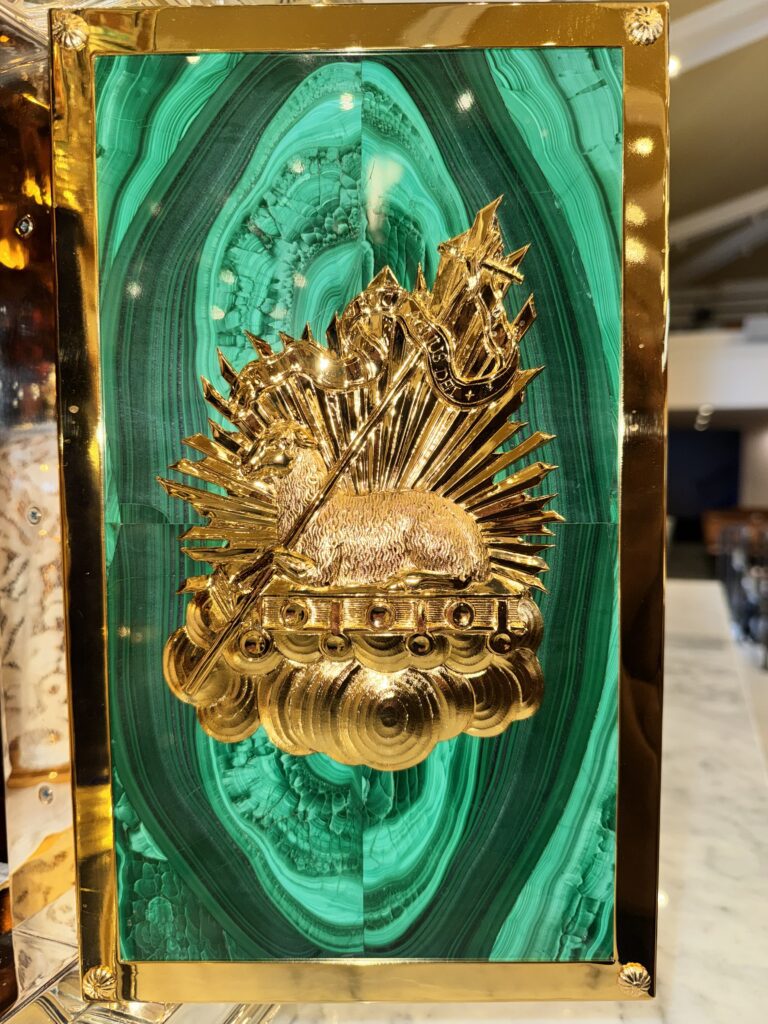
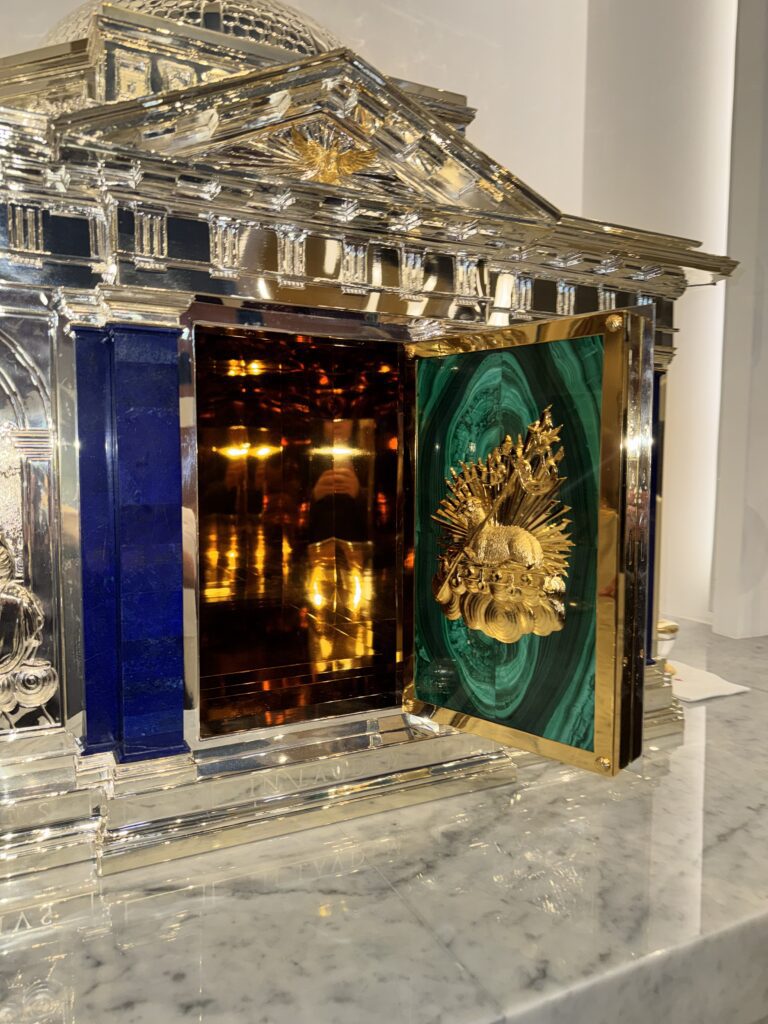
The doors of the tabernacle feature rich green malachite slabs, carefully book-matched so that their natural patterns mirror one another. This vivid stone forms the backdrop for an image of the Victorious Lamb, a powerful symbol drawn from the Book of Revelation representing Christ’s triumph over sin and death.
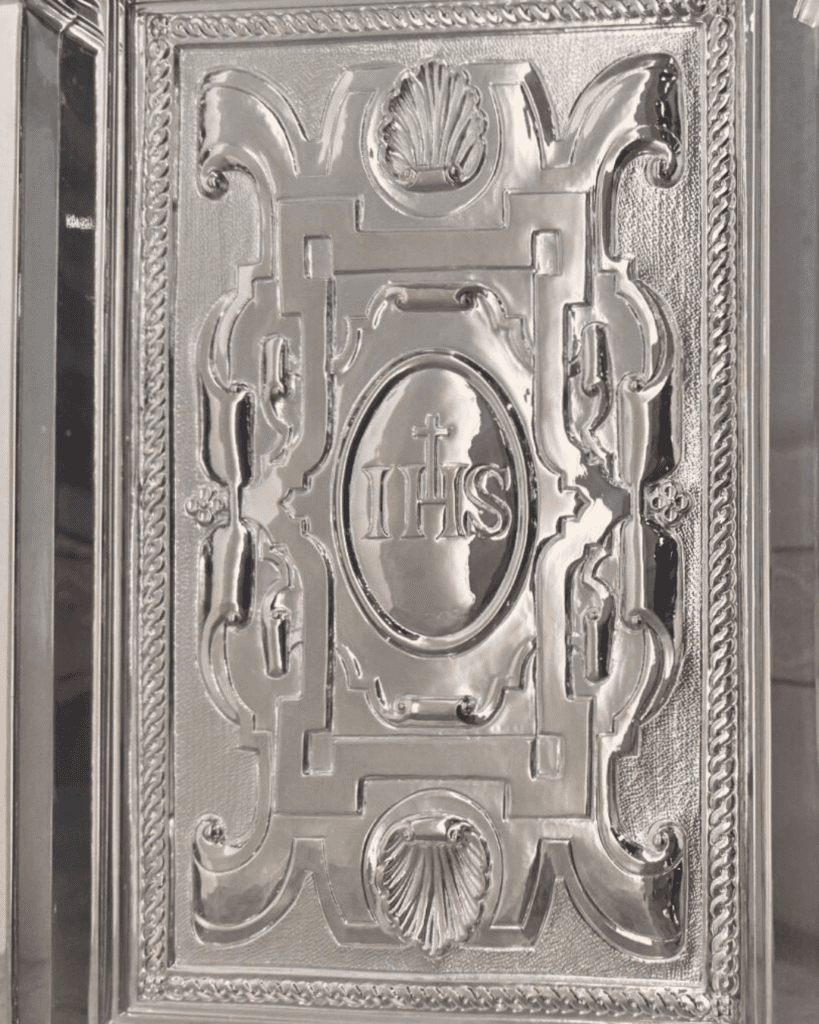
Throughout the exterior walls, finely worked strapwork cartouches appear, including the ancient IHS emblem, a traditional contraction of the Holy Name of Jesus. This symbol has been used for centuries to mark the presence and authority of Christ.
Though materials were sourced from distant lands, each element was shaped and assembled through skilled craftsmanship in Tuscany, Italy, continuing a centuries-old tradition of sacred artistry devoted to the service of the Church.
An Artistic Hymn to the Blessed Virgin Mary
The Porta Cœli Tabernacle is also an artistic hymn of praise to the Blessed Virgin Mary, who always leads Christians to her Son.
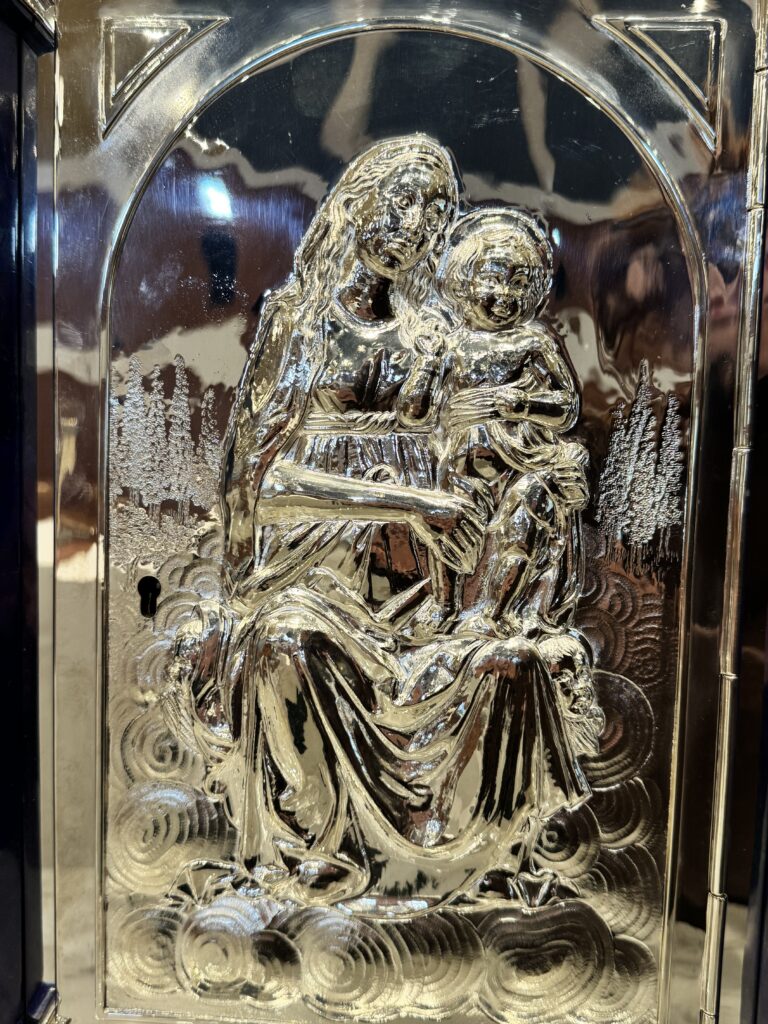
Just as the Lord first “tabernacled” within her womb before entering the world as the God-Man, so Christ now reigns sacramentally within the tabernacle and enters the world from its doors in the Holy Eucharist.
For this reason, the central door contains an image of the Christ Child seated upon the Virgin’s knee, emphasizing the mystery of the Incarnation. On either side appear angels in adoration, recalling the Holy of Holies in the Temple of Jerusalem, where carved angels stood in reverent worship before the presence of God.
Above them appear the sun and the moon, each now pale in comparison to the Light of Christ brought to the world. On the outer walls appears a wreath containing an anagram of the name “Maria,” highlighted with silver ribbons marking her importance and indicating liturgical festivity. In an artistic tour de force, the drum supporting the dome features tiny inset rectangles displaying symbols of the honorific titles of the Blessed Virgin from the Litany of Loretto.
On the outer walls of the tabernacle appears a wreath containing an artistic anagram of the name “Maria.” Silver ribbons surround the wreath, signifying festivity and honoring the unique role of the Blessed Virgin as the Mother of the Savior and Mother of the Church.
Encircling the drum beneath the dome are tiny inset rectangles displaying symbols associated with the titles of the Blessed Virgin from the Litany of Loreto, forming a crown of Marian symbolism around the sacred structure.
Architecture & Symbolism
The Porta Cœli Tabernacle brings together numerous theological and architectural themes into a single unified work of sacred art.
The central door is framed within a triumphal arch, a form borrowed from the architecture of the ancient world that celebrated victorious entries. Here the symbol recalls Christ’s triumphant entrance into the world through the Incarnation.
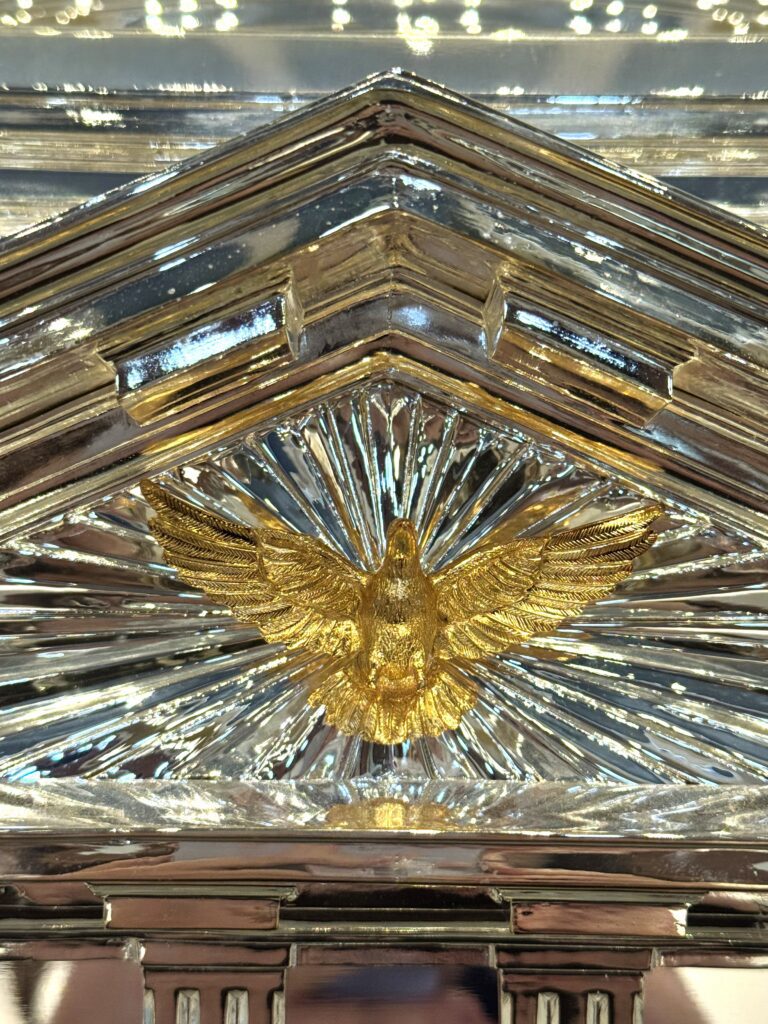
Above the doorway, a temple pediment displays a gilded dove, representing the Holy Spirit whose divine action made the Incarnation possible.
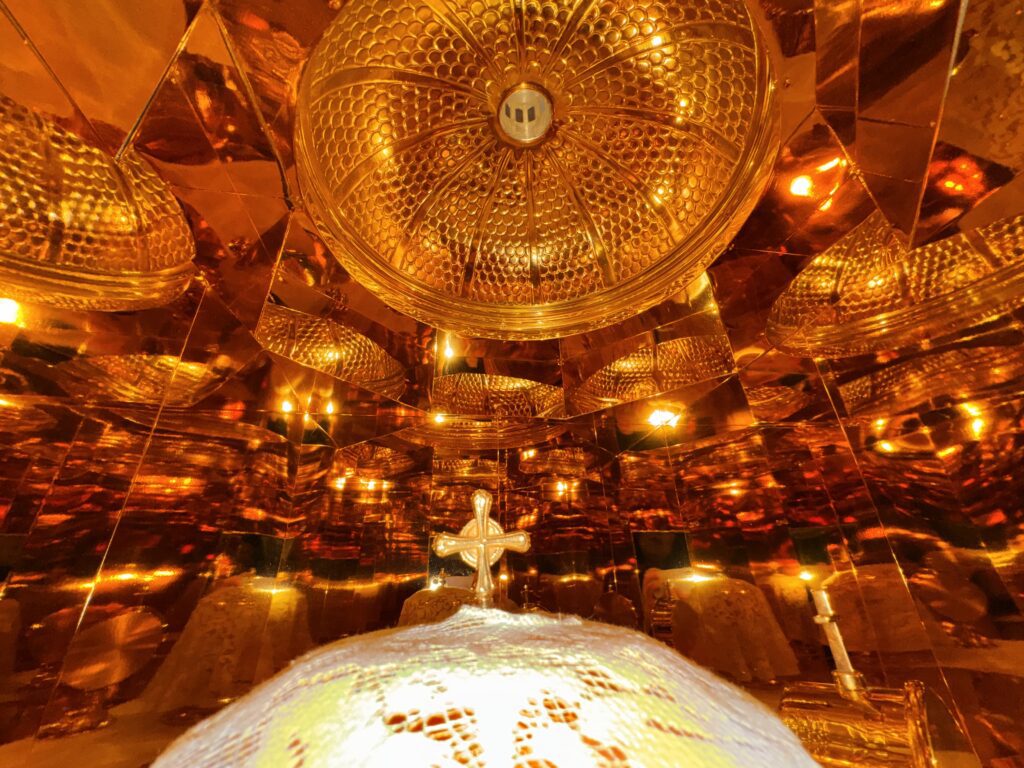
Within the tabernacle itself, the interior becomes a true domus aurea, a “house of gold.” Gold-plated silver panels line the interior chamber, creating a radiant space worthy of the Eucharistic presence.
At the center of the dome is a small oculus filled with rock crystal, allowing light to enter and symbolically point toward heaven.
Taken together, the tabernacle draws the faithful toward the mystery of the Eucharist. At first glance its beauty proclaims the glory of Christ hidden within the Blessed Sacrament. Yet upon closer inspection, its many symbols reveal deeper truths about salvation history, the fulfillment of Scripture, and the role of the Blessed Virgin Mary in God’s plan.
Credits
Conceptualized by
Fr. Quan Tran
Designed & Fabricated by
Heritage Liturgical
Silversmith
Maestro Emilio Leon
Materials
Lapis Lazuli — Afghanistan
Malachite — Russia
Fabricated in Tuscany, Italy
The tabernacle bears the inscription from the Letter to the Ephesians:
Ut simus in laudem gloriæ ejus
 “That we might exist for the praise of His glory.”
 — Ephesians 1:12
Support Our Parish’s Vision: Donate to Our Church Renovation Fund Today!
We extend our heartfelt gratitude to everyone who generously supported these projects through the Church Building Fund, and to all who volunteered their time and energy to help bring these projects to life.
Ways to Donate and Support Parish Projects:
1. Online: Make a secure donation here.
2. By Check: Make checks payable to St. Hedwig Catholic Church and write Building Fund in the memo line.
3. Cash Donations: Place your donation in an envelope labeled with your name and contact information and indicate it is for the Building Fund.
Checks or cash donations can be placed in the collection basket during Mass, in the donation box near the St. Michael statue, or submitted to the Parish Office (in-person or by mail). All donations are tax-deductible (EIN #33-0014186).