
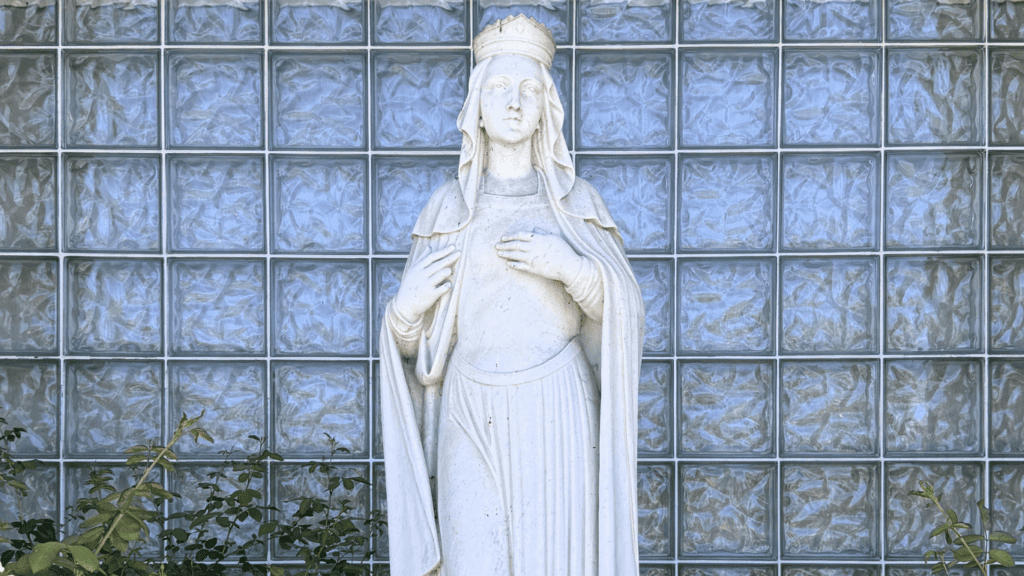
St. Hedwig of Silesia:
A Life of Faith, Charity, and Holiness
On Friday, October 16, we celebrate the feast of our parish’s patroness, St. Hedwig of Silesia. Yet many are unfamiliar with the remarkable story of this holy saint, who was a princess, wife, mother, and devoted servant of the poor.
St. Hedwig was born into Bavarian nobility in Andechs in 1174, in present-day Germany, and received a pious and highly educated upbringing at a convent in Bavaria. In 1186, she married Henry I the Bearded, Duke of Silesia, a region in present-day Poland, as part of a political alliance between two powerful ruling families. Together, they became influential figures who used their authority and wealth to advance the Gospel and serve those in need.
Henry and Hedwig were deeply faithful Catholics who governed their lands wisely, founded churches and monasteries, and supported hospitals and charitable institutions. They established the Cistercian convent at Trebnitz, Poland, the first house of religious women in Silesia. Their marriage produced seven children, though historical accounts differ on how many survived to adulthood. After the birth of their youngest child, they took vows of chastity and devoted themselves more fully to prayer and works of charity.
Despite her noble status, St. Hedwig embraced a life of simplicity and penance. She fasted, ate plain food, and lived with few personal possessions. She deeply loved the Eucharist, prayer, and Sacred Scripture, which she had read aloud during meals in her household. Rather than relying solely on servants to carry out charitable works, she personally cared for the poor and sick, washed the feet of lepers, visited prisoners, and provided food and clothing to those in need. She also sheltered the sick and disabled in her castle, assisted widows and orphans, helped expectant mothers, and intervened on behalf of prisoners facing severe sentences. Her compassion was so well known that one biographer described the poor as following her everywhere, as though she were their mother.
Following the death of Duke Henry in 1238, St. Hedwig retired to the monastery at Trebnitz, where she lived as a lay sister and continued her life of prayer and service until her death in 1243. She was canonized in 1267. Her tomb at Trebnitz became a popular pilgrimage destination, and she remains a beloved patron saint of the poor, widows, orphans, brides, duchesses, parents who have lost children, and those experiencing difficulties in marriage.
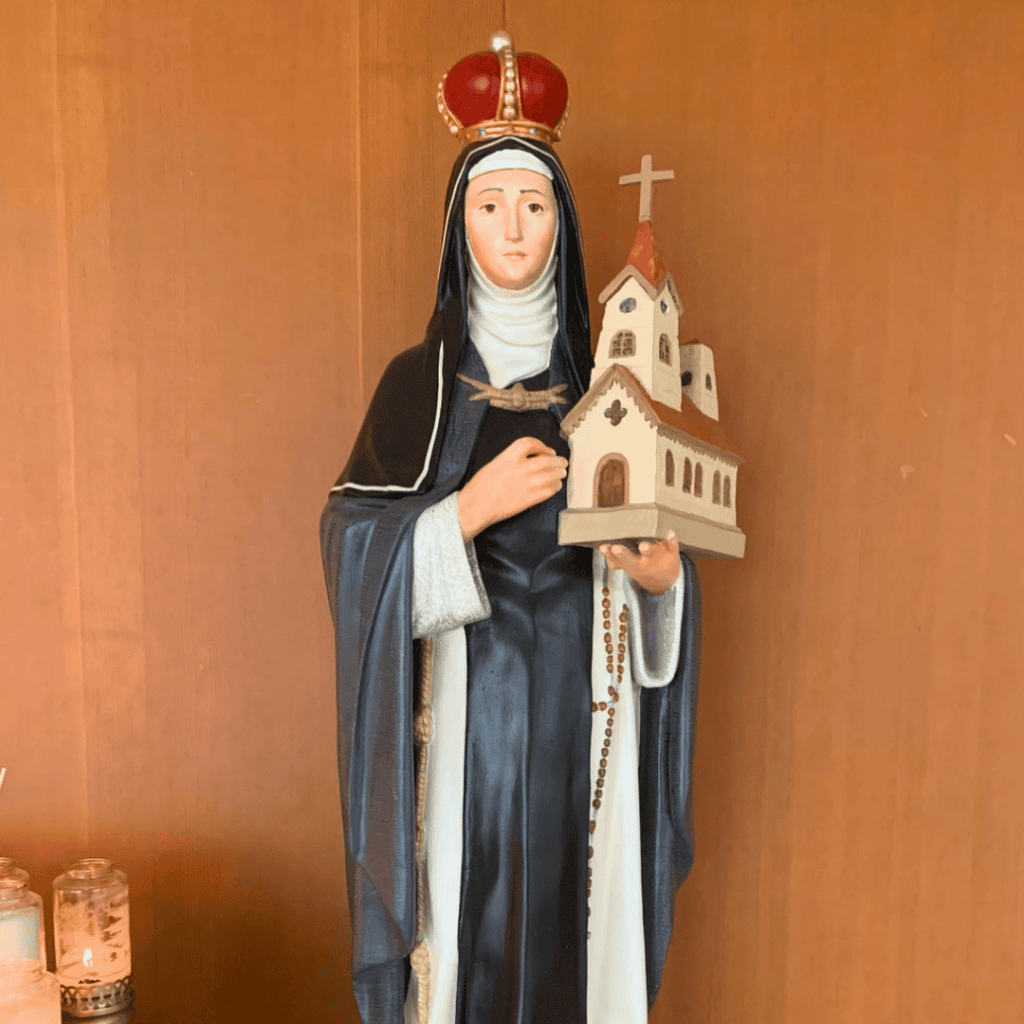
St. Hedwig is often depicted holding a statue of the Blessed Virgin Mary, feeding the poor, or carrying a church, symbolizing her role in founding and supporting churches and monasteries. Beyond her charitable legacy, she also became a symbol of unity between the German and Polish peoples. Though born in Bavaria, she devoted much of her life to Silesia, helping bridge cultural and national differences through a shared Catholic faith.
St. Hedwig’s life reminds us that wealth and power need not be obstacles to holiness. Rather, whatever our circumstances—whether prosperity, poverty, personal crosses, or temptations—God can use them as means of our sanctification and the advancement of His Kingdom. Through prayer, humility, and selfless service, we, too, can become instruments of His love.
St. Hedwig of Silesia, pray for us!
“The greater one is by birth, the greater one must be in virtue, and the more distinguished we are in station, the more we must distinguish ourselves by our conduct, in order to be a bright example to others.” – Quote attributed to St. Hedwig
Prayer: Saint Hedwig, you were born of noble and wealthy lineage, yet you never allowed that to deter you from holiness. Instead, you used all you had for the glory of God and the advancement of the Church. Please pray for me, that I may use all I have been given in life for God’s glory and never for selfish or vain purposes. Saint Hedwig, pray for me. Jesus, I trust in You.